Yuan Tiangang Bone Weight: Sources, 52 Poems & Calculator
What the Tang histories say about Yuan Tiangang, what they do not prove about the later bone weight table, and how to verify its 52-poem calculation today.
Calculate your bone weight for free

What can we actually verify about Yuan Tiangang and bone weight?
Bone weight is a traditional divination lookup that is traditionally attributed to Yuan Tiangang. The attribution is culturally established, but it is not the same as documented authorship.
The surviving official histories confirm that Yuan Tiangang was a real early-Tang figure known for physiognomy. They do not state that he created the later numerical table that adds year, lunar month, lunar day, and birth-hour values.
How to calculate your own bone weight
The modern method adds four values: your sexagenary birth year, lunar birth month, lunar birth day and recorded two-hour birth period. The total usually falls from 2.1 to 7.2 liang and points to one of 52 poems. By hand, the error-prone step is converting a Gregorian birthday to the lunar date and sexagenary year.
Enter your birth date and hour to get your bone weight in liang and the poem that goes with it: the Chinese bone weight calculator converts the date for you and shows the year, month, day and hour values, so you can check each one against the complete bone weight chart.
What the official histories record
Online, the method is often presented as a precisely dated Tang invention. The primary records do not support that stronger claim.
The Old Book of Tang, volume 191 places Yuan Tiangang (袁天纲) in its biographies of technical specialists and says he was especially skilled in physiognomy. It records court and face-reading anecdotes, including the well-known story concerning the young Wu Zetian.
The New Book of Tang, volume 204 also includes Yuan in its technical biographies and preserves related physiognomy material.
These texts establish the historical person and his reputation. They do not document:
- a 2.1-7.2 liang table;
- 52 poems authored by Yuan;
- the modern four-part lookup algorithm;
- a teacher-student relationship with Li Chunfeng;
- co-authorship of the Tui Bei Tu as evidence for this method.
Absence from these biographies does not prove when every later tradition began, but it means authorship should be described as attribution, not fact.
Are the 52 poems Tang originals?
We have not found a primary Tang source that identifies the current set of 52 poems as Yuan Tiangang's work. Their present circulation, wording, and table association should therefore be treated as a later textual tradition unless a traceable edition proves otherwise.
That also explains why websites can disagree. Tables may be copied from different modern compilations without edition notes. Our calculator makes a reproducibility claim only: it uses the exact values published in our lookup-table page.
What does historical attribution tell us about accuracy?
Nothing by itself. A tradition can be historically interesting without being empirically predictive. Bone weight remains a traditional cultural interpretation, not a scientifically validated personality, career, relationship, health, or forecasting assessment.
The four-value arithmetic can be checked. The poem cannot establish health, wealth, relationship, career, or future outcomes.
How to verify a result
- Use the recorded civil birth date and birth hour.
- Verify the lunar conversion and sexagenary year.
- Confirm the four values against the same published table.
- Do not invent noon when the birth hour is unknown.
- Treat the poem as historical cultural material rather than evidence for a decision.
For interpretation boundaries and common misconceptions, continue to what the bone weight score means. For more calendar-derived detail, the BaZi calculator preserves all four stem-branch pillars, while its interpretations remain a traditional framework.
Frequently asked questions
Why is it still called Yuan Tiangang bone weight?
That is the established popular name and search term. Keeping the name helps users find the tradition; qualifying it as a later attribution prevents the name from being mistaken for verified authorship.
Is Yuan Tiangang described as an astronomer in these biographies?
The cited Yuan entries emphasize physiognomy. Astronomy and calendar work are associated with other figures in the same historical setting, especially Li Chunfeng. The source does not justify transferring those credentials to prove the bone weight table.
Where can I calculate it?
Use the bone weight calculator for the conversion and breakdown, then audit it against the full year, month, day, and hour chart. Read the score explanation before interpreting the poem.
Author
Categories
More Posts
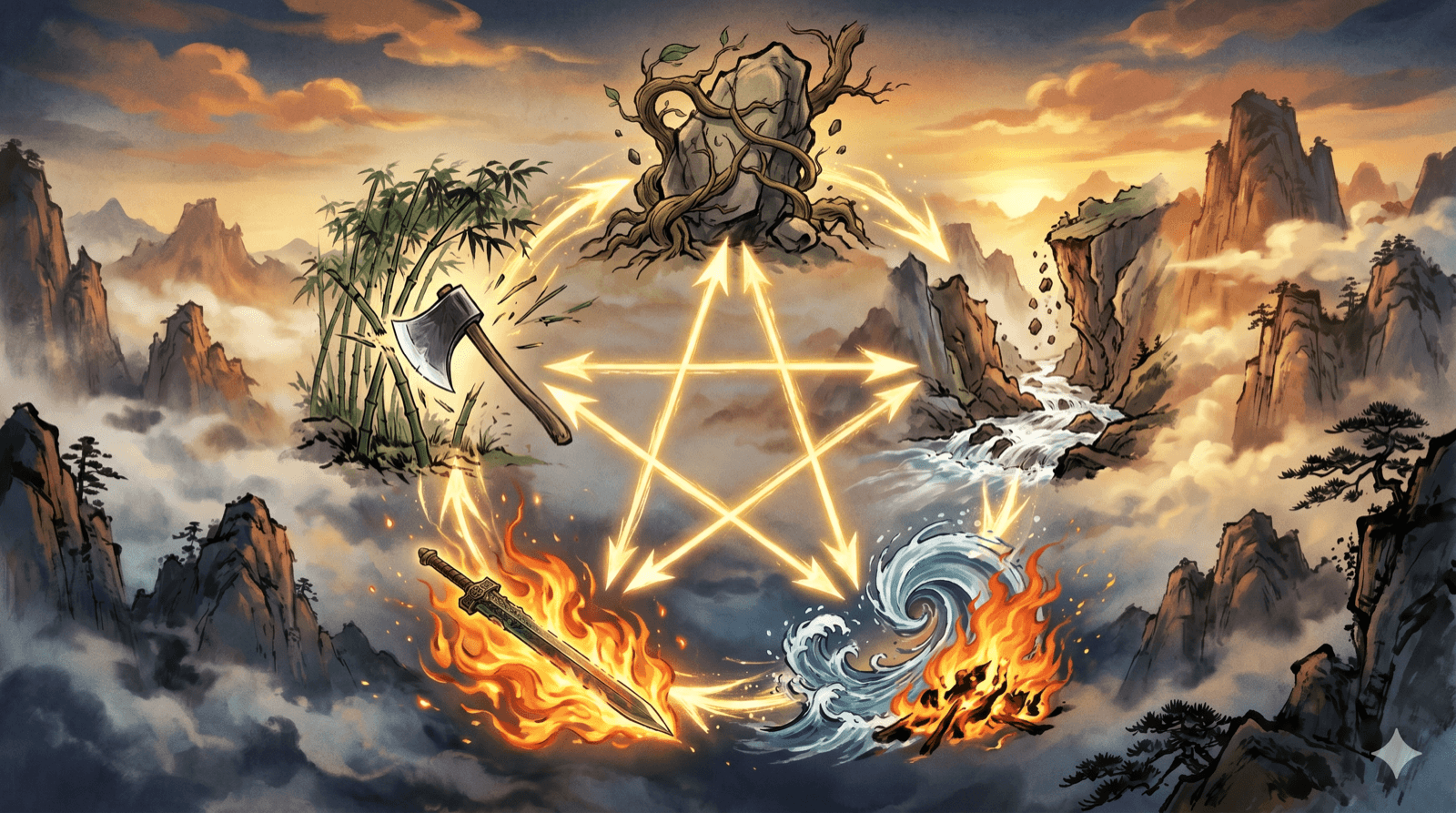
Five Elements Clash Guide: Complete Ke Cycle Table
Use the complete Five Elements controlling (Ke) cycle table, learn what Wood, Earth, Water, Fire, and Metal control, and interpret chart or relationship tension responsibly.
Missing Elements in BaZi: Meaning, Chart Check & Remedies
Learn how to check for a missing Five Element in a BaZi chart, what missing Wood, Fire, Earth, Metal, or Water means traditionally, and which remedies are symbolic rather than medical.
The 12 Palaces of Zi Wei Dou Shu: What Each Palace Means
From the Life Palace to the Parents Palace, what does each of the twelve palaces in Zi Wei Dou Shu (Purple Star Astrology) cover? Plain-English meanings, alternative names and how related palaces work, with an interactive example chart.
Newsletter
Get new guides by email
New articles on BaZi, compatibility and Zi Wei Dou Shu, plus product updates, sent to your inbox.