BaZi Marriage Compatibility — Spouse Stars, Partner Timing & Free Analysis (2026)
Learn how BaZi marriage compatibility traditionally reads Spouse Star, Spouse Palace, Day Master interaction, timing, and relationship dynamics.
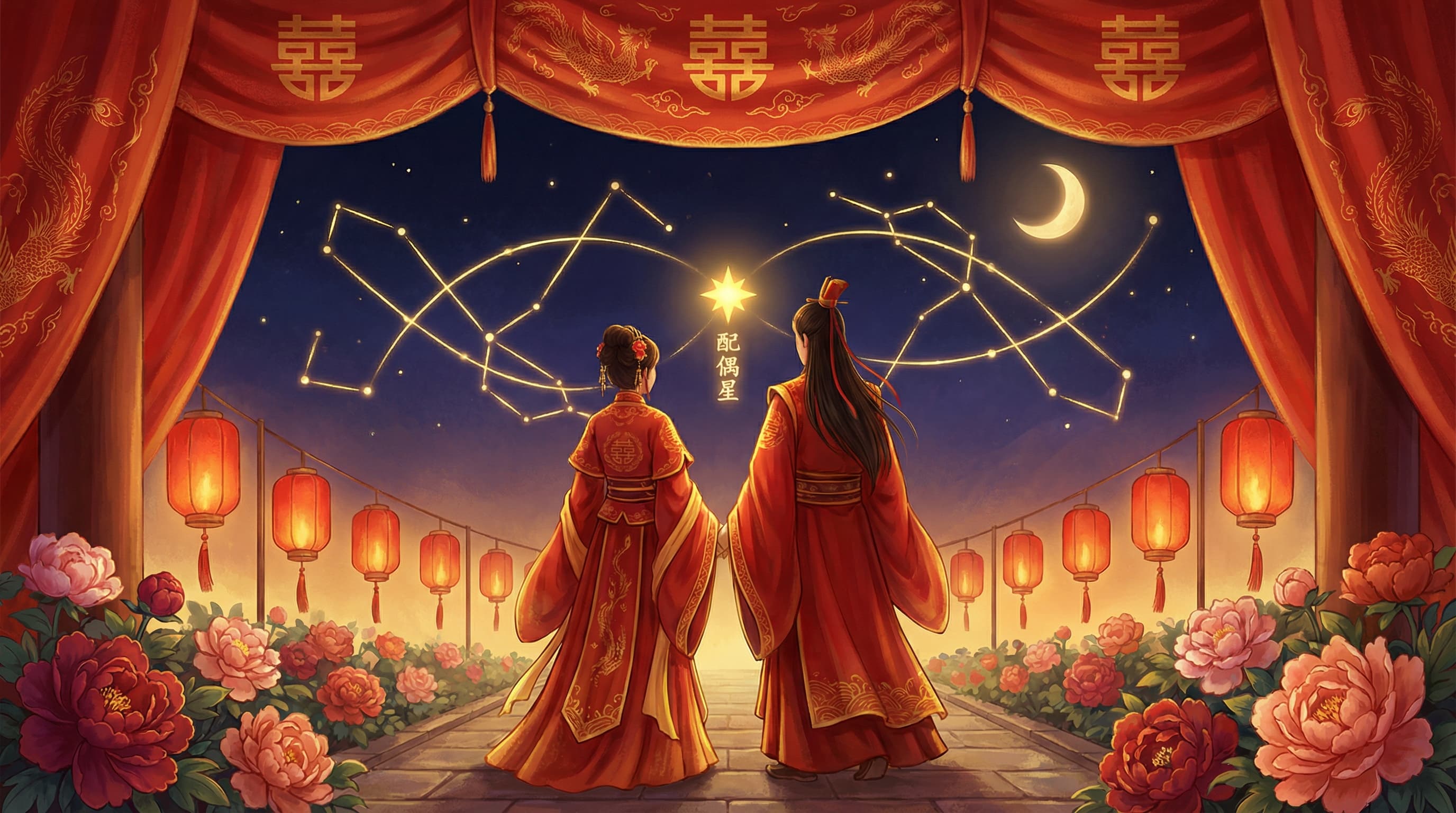
BaZi Marriage Compatibility: What Your Chart Says About Your Partner
BaZi marriage compatibility goes beyond generic zodiac matching by comparing several chart relationships at once. Traditional readers use those symbols to discuss attraction, communication, friction, and timing themes.
This is a traditional interpretive framework, not a scientifically validated predictor of who you will marry, whether a relationship will last, or when an event will occur. Use it to structure reflection and conversation alongside observed behavior, shared values, safety, and practical compatibility.
How to Check Marriage Compatibility for You and Your Partner
You need both people's birth dates. Then compare four layers:
- Day Masters: do the two Day Masters form a Heavenly Stem combination, share an element, or control each other?
- Spouse Palaces: each person's Day Branch. Check whether the two branches combine or clash.
- Other branch relationships: harmonies and clashes between the rest of the two charts.
- Five Element balance: does one chart supply elements the other lacks?
Enter both birth dates to compare your Day Masters, branch clashes and combinations, and Five Element balance: the compatibility calculator puts both charts side by side, including how your Ten Gods interact. It works for spouses and dating partners alike. The sections below explain what each layer, and the Spouse Star, traditionally means.
The Spouse Star: What Your Chart Says About Your Partner
Before comparing two charts, traditional BaZi first looks at the Spouse Star (配偶星), a Ten Gods symbol used to discuss partner archetypes and relationship expectations.
For Men: The Wealth Star
In a man's chart, the Wealth Star represents his wife or primary partner. This isn't about money -- it's about the element he controls, which in relationship terms translates to the person he's drawn to protect, provide for, and build with.
Direct Wealth (正财) in the chart points to a stable, devoted, home-oriented partner. Men with prominent Direct Wealth tend to value loyalty and consistency in marriage. They're looking for someone who makes life feel grounded.
Indirect Wealth (偏财) is traditionally associated with independent or socially dynamic partner themes. Some practitioners also read repeated appearances as a prompt to discuss attention and boundaries; the symbol does not establish anyone's behavior.
For Women: The Officer Star
In a woman's chart, the Officer Star represents her husband or primary partner.
Direct Officer (正官) points to a responsible, principled partner with a strong sense of duty. Women with prominent Direct Officer often find themselves in structured, traditional relationships -- and they prefer it that way.
Seven Killings (七杀) indicates attraction to powerful, intense personalities. The relationship is rarely boring. There's passion and challenge in equal measure, and it works best when both partners have the maturity to handle intensity.
When the Spouse Star Is Missing
No visible Spouse Star does not mean you will not marry. Traditional readers may consider several chart-level interpretations instead:
The partner enters your life through a Luck Pillar (大运) rather than being a constant theme from birth. You might not think much about marriage until a specific decade activates that energy.
Your approach to relationships is unconventional. You might marry later, choose non-traditional partnership structures, or prioritize other life areas until the timing shifts.
The Spouse Star is hiding in the hidden stems (藏干) within your Earthly Branches. It's present but subtle -- not immediately visible on the surface of the chart.
The Spouse Palace: Your Marriage Foundation
The Day Branch -- the Earthly Branch beneath your Day Master -- is called the Spouse Palace (夫妻宫). If the Spouse Star tells you about the person you marry, the Spouse Palace tells you about the marriage itself.
Think of it as the house your relationship lives in. A comfortable Spouse Palace means the marriage has a stable container. A turbulent one means the container gets shaken regularly, regardless of who your partner is.
What to look for in the Spouse Palace:
Peach Blossom star (桃花) present -- Natural romantic charm. You attract partners easily, sometimes too easily. The challenge isn't finding someone; it's choosing well.
Nobleman star (贵人) present -- Your partner brings helpful connections, social elevation, or practical support into your life. Marriage improves your circumstances.
Clash with Year or Month Branch -- Family may initially oppose the relationship, or there's tension between your family of origin and your married life. It doesn't mean the marriage fails -- it means this friction is part of the story.
Harmony with other pillars -- Your partner integrates smoothly into your broader life. Friends like them, family accepts them, career and marriage support each other.
When comparing two charts, practitioners examine both Spouse Palaces. A Six Harmony (六合) between the Day Branches is traditionally read as an easier-coordination theme, but it cannot establish day-to-day compatibility on its own.
Day Master Synastry: The Magnetic Pull
When you compare two people's Day Masters, you're looking at the fundamental chemistry between them. Do these two core identities attract, complement, or compete?
The Five Heavenly Stem Combinations
These are the pairings Chinese astrologers get excited about:
| Combination | What it feels like |
|---|---|
| Jia 甲 + Ji 己 (Wood + Earth) | Strength anchored by nurturing. He builds, she grounds -- or vice versa. |
| Yi 乙 + Geng 庚 (Wood + Metal) | The jeweler and the gem. One shapes, the other shines. Intense mutual fascination. |
| Bing 丙 + Xin 辛 (Fire + Metal) | Sunlight on jewelry. Warmth transforms reserve into radiance. |
| Ding 丁 + Ren 壬 (Fire + Water) | Candlelight reflected on deep water. Intimate, mysterious, quietly electric. |
| Wu 戊 + Gui 癸 (Earth + Water) | Mountain sheltering rain. One protects, the other flows. Tender and stable. |
When two Day Masters form one of these combinations, BaZi practitioners may call it a fated-affinity (有缘人) symbol. Treat that phrase as traditional vocabulary, not evidence that two people are destined or will feel immediate attraction.
When Both Partners Share the Same Element
Same-element pairings are more complex. You understand each other deeply -- same instincts, same blind spots.
Two Wood Day Masters are like a tree beside a vine. It works when one leads and the other adapts. Two Fire Day Masters risk one partner overshadowing the other unless grounding elements are present. Two Water Day Masters connect emotionally but may lack the structure to build a stable daily life.
The key for same-element marriages is the surrounding elements. If both charts together have enough variety in the supporting cast, the shared element becomes a point of deep understanding rather than competition.
Five Elements and Long-Term Marriage
The Spouse Star, Day Master interaction, and Five Element balance are traditionally read together to discuss attraction and long-term relationship themes. They do not determine whether a marriage will last.
The most resilient marriages tend to be complementary: each partner supplies elements the other lacks. A man with abundant Metal but no Fire marries a woman whose chart is Fire-dominant. She brings warmth and expressiveness to his structured world. He brings discipline and clarity to her passionate one.
When both charts are heavy in the same elements and missing the same ones, the relationship amplifies existing patterns without providing balance. Two Fire-dominant charts with no Water: intense passion, no circuit breaker for conflict. Two Earth-dominant charts with no Wood: stability that calcifies into routine.
The generating cycle also plays beautifully in marriage. When one partner's dominant element naturally feeds the other's -- Water nourishing Wood, Wood feeding Fire -- there's a built-in dynamic of mutual support. One partner's natural overflow is exactly what the other needs.
The controlling cycle requires more awareness. If her Metal strongly controls his Wood, she may inadvertently be overly critical or pruning. If his Earth dams her Water, he might restrict her freedom without realizing it. These dynamics aren't fatal, but they need to be seen clearly.
When Will You Meet Your Partner?
Traditional BaZi also includes timing symbols. These do not produce a scientifically validated event probability or exact marriage date.
Spouse Star in Your Luck Pillars
When the Spouse Star appears in a 10-year Luck Pillar or Annual Pillar, practitioners may treat that period as a prompt to review relationship priorities. It does not guarantee meeting someone or changing an existing relationship.
A man entering a Luck Pillar dominated by his Wealth element often finds that relationships suddenly become a central life theme, even if he'd been career-focused for the previous decade. A woman entering an Officer Luck Pillar may find herself drawn to commitment in a way she hadn't been before.
Red Luan and Heavenly Happiness Stars
Two special stars signal marriage timing specifically:
Red Luan (红鸾) -- Traditionally associated with engagement, marriage, or notable relationship themes when activated; it is not a measured event probability.
Heavenly Happiness (天喜) -- The companion star to Red Luan, signaling joyful romantic milestones.
Traditional matchmakers would check these stars alongside the Spouse Star timing to recommend the best year for a wedding.
BaZi Synastry vs. Western Astrology Synastry
If you know Western astrology, you might be familiar with synastry -- overlaying two natal charts and checking Venus, Mars, and Moon aspects. BaZi marriage compatibility works from the same premise (comparing two charts) but uses a completely different system:
| Western Synastry | BaZi Marriage Compatibility | |
|---|---|---|
| Core system | Planets and zodiac signs | Five Elements and Ten Gods |
| Key partner indicator | Venus/Mars aspects | Spouse Star and Spouse Palace |
| Timing | Transits and progressions | Luck Pillars and Annual Stars |
| Focus | Emotional and sexual chemistry | Elemental balance and life path alignment |
Neither system is "better." They're different lenses on the same question. Many people find BaZi's emphasis on practical compatibility -- life goals, elemental balance, timing -- complements Western astrology's focus on emotional and psychological dynamics.
Further Reading
For the broader framework of chart comparison beyond marriage, see our BaZi compatibility overview. And to understand how the Ten Gods shape relationship dynamics -- why Wealth stars matter for men and Officer stars for women -- that guide breaks down each archetype in full.
Frequently Asked Questions
What is the Spouse Star in BaZi?
The Spouse Star (配偶星) is a traditional Ten Gods symbol used to discuss relationship archetypes. Male charts use the Wealth Star and female charts use the Officer Star; their Direct and Indirect forms add different symbolic themes. These are interpretive categories, not verified partner traits.
How to find your ideal partner using BaZi?
BaZi traditionally compares three layers: Spouse Star archetypes, the Spouse Palace (Day Branch), and Five Element balance. A chart that appears complementary is a discussion signal, not proof of an ideal partner. Use our compatibility calculator to review these factors side by side.
Does BaZi Day Master compatibility matter for marriage?
Day Master interaction is one factor in traditional BaZi marriage analysis. A Heavenly Stem Combination (天干合), such as Jia Wood with Ji Earth or Ding Fire with Ren Water, is read as a potential affinity theme. It neither guarantees attraction nor overrides observed communication, values, and relationship behavior.
Author
Categories
More Posts
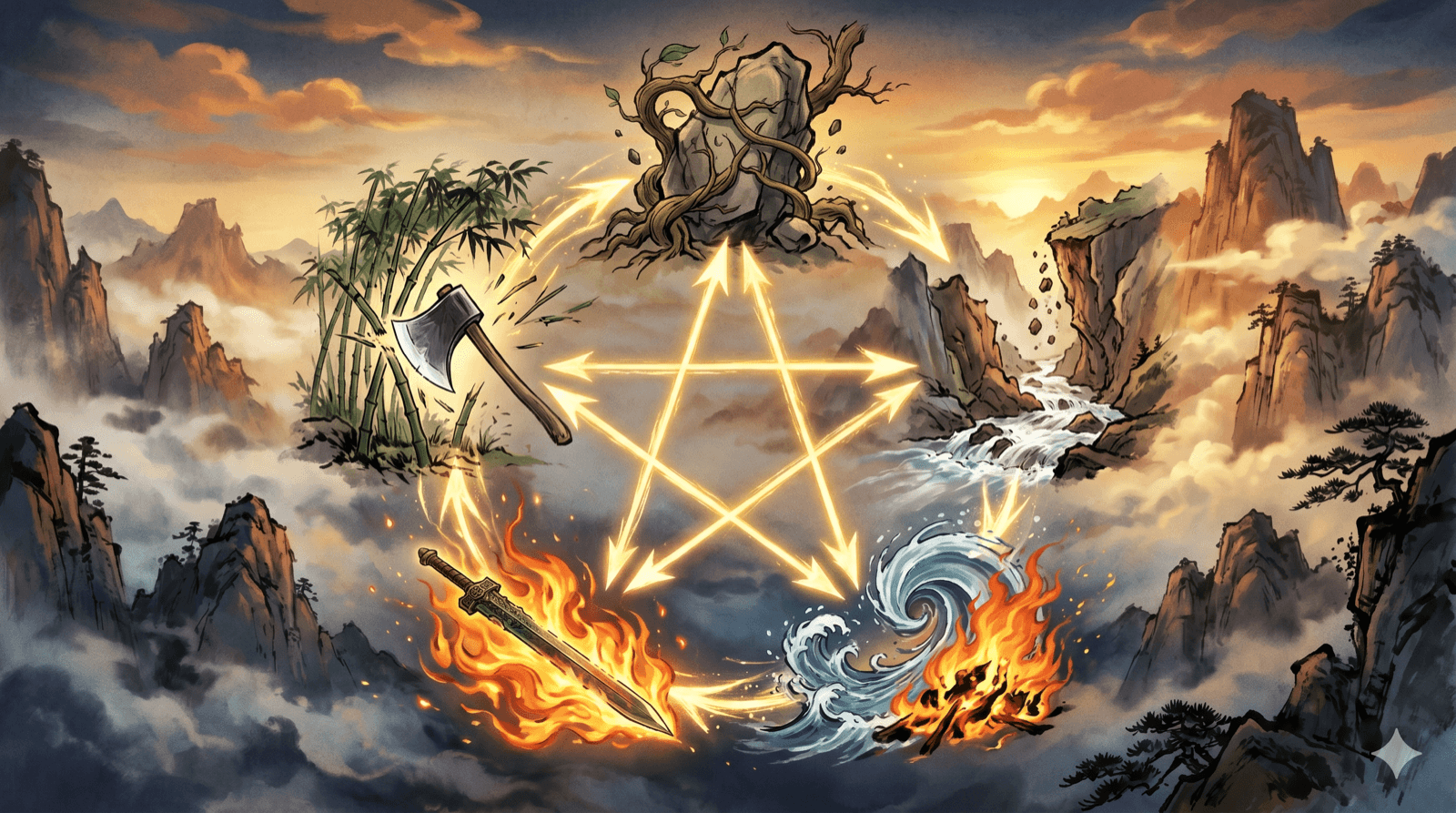
Five Elements Clash Guide: Complete Ke Cycle Table
Use the complete Five Elements controlling (Ke) cycle table, learn what Wood, Earth, Water, Fire, and Metal control, and interpret chart or relationship tension responsibly.
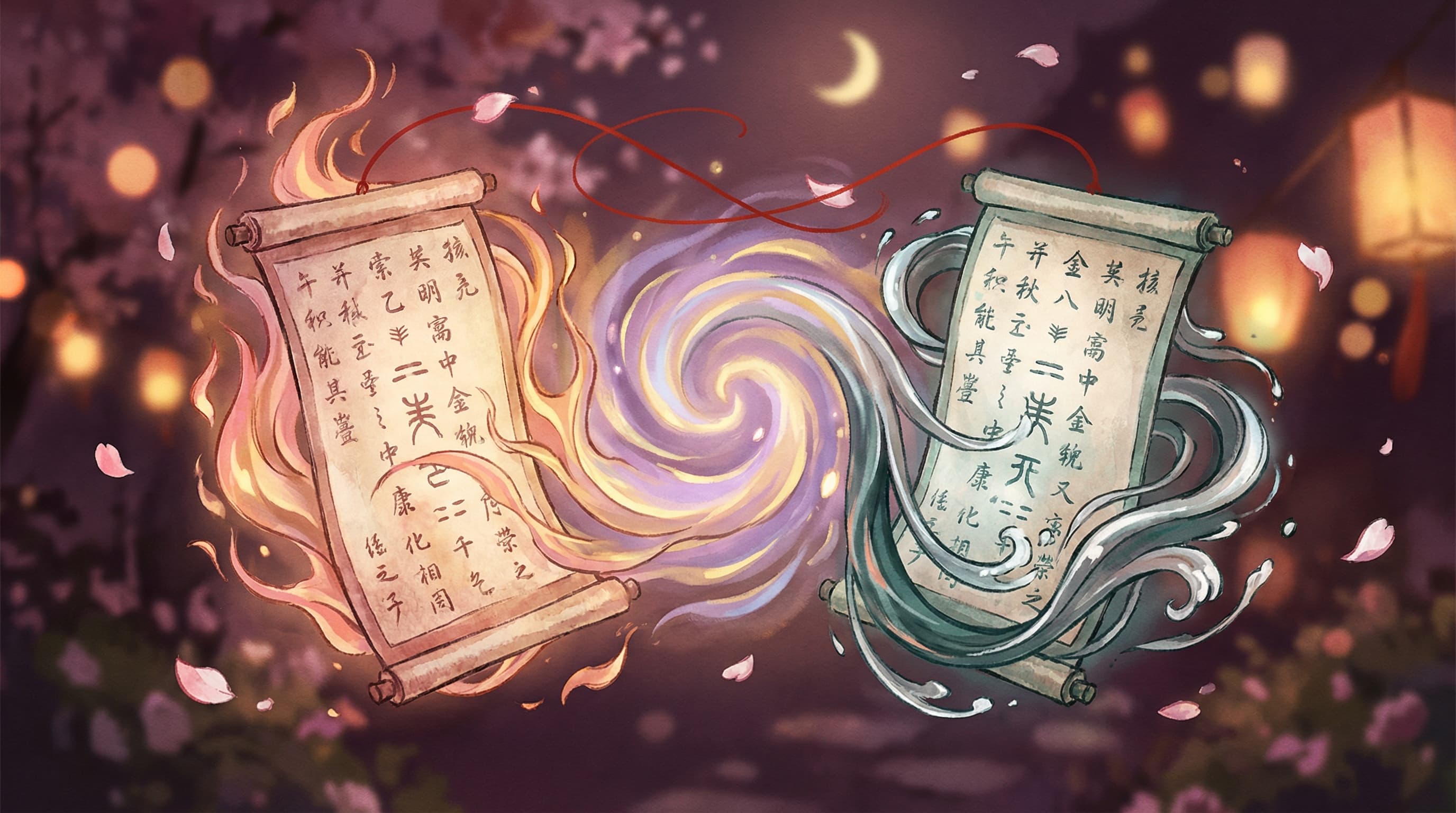
BaZi Compatibility: Are You and Your Partner a Match?
Learn how BaZi compatibility is traditionally read through Day Masters, Five Elements, Earthly Branches, Ten Gods, and timing—plus what the method cannot prove.

Zi Hour BaZi: How to Read Charts for Births Near Midnight or Unknown Birth Times
Born from 11 PM to midnight or unsure of your birth hour? Learn the two Zi-hour day-boundary conventions, what actually changes, and how to compare charts without altering the recorded time.
Newsletter
Get new guides by email
New articles on BaZi, compatibility and Zi Wei Dou Shu, plus product updates, sent to your inbox.